I've Spent The Last 4 Camping Seasons Testing Mosquito Solutions Whilst Getting Absolutely Destroyed By Them. Here's Every Solution I Tested — And The One That Finally Worked.
7 solutions. 4 summers. One that actually lets me sit around the campsite without being eaten alive.
 By Jake Mercer, Gear Editor
Updated May 2026
7 min read
By Jake Mercer, Gear Editor
Updated May 2026
7 min read
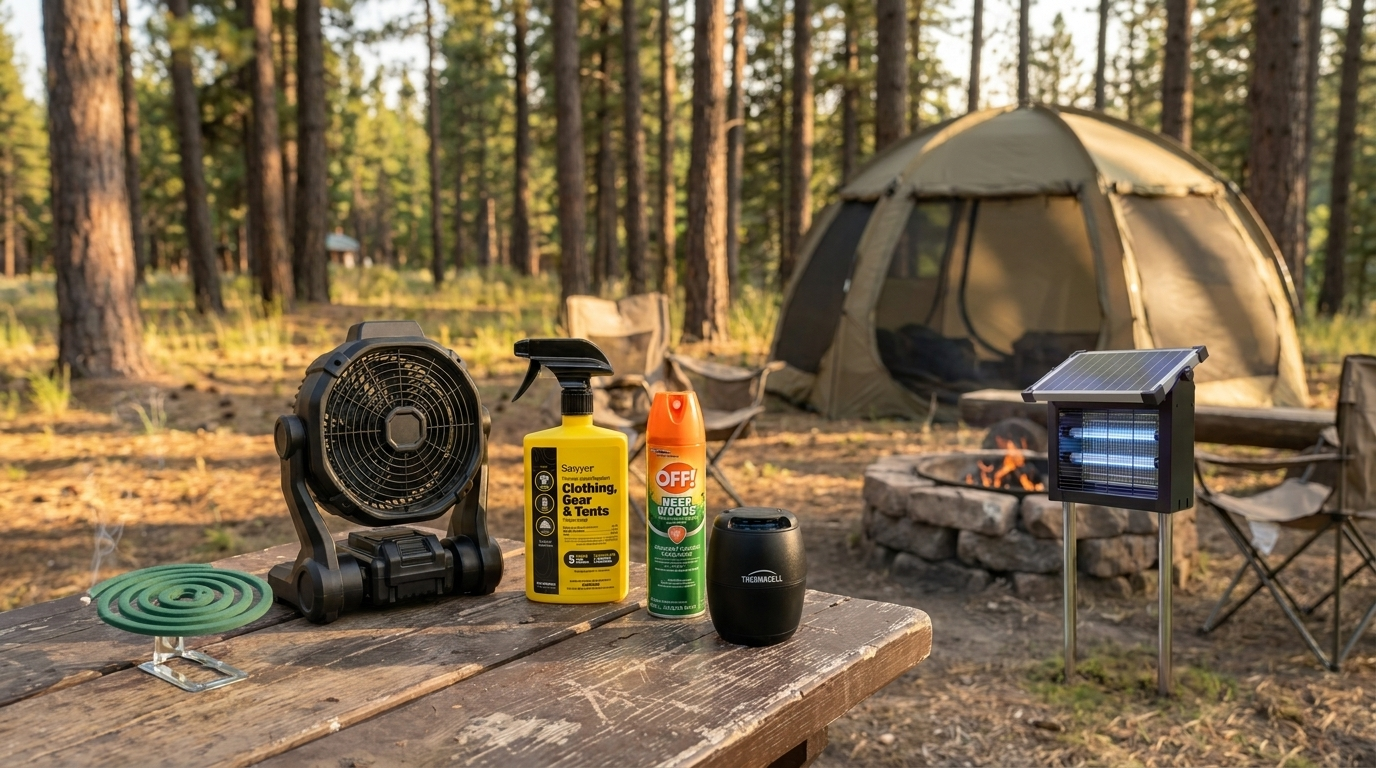
I've been camping since I was nine years old. Thirty-some years of sleeping under stars, cooking over fire, and waking up to the kind of quiet you can't find anywhere else. I love everything about it.
Except the mosquitoes.
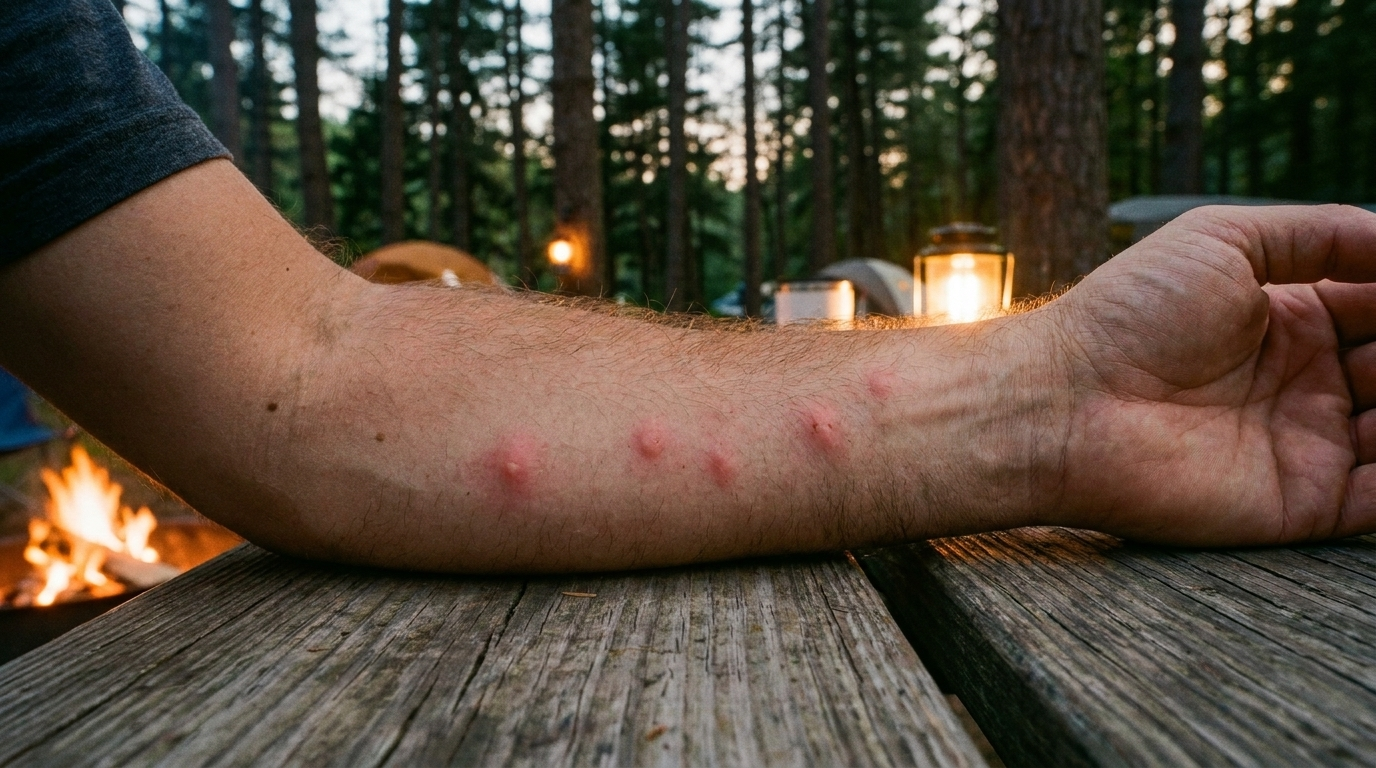
If you're reading this, you already know what I'm talking about. You step out of the tent at dusk and within thirty seconds you've got six or seven of them buzzing around your head, and you're bit once or twice before you even reach the fire. You spend the whole evening swatting instead of relaxing. You go to bed with welts on your ankles and that one mosquito that somehow got inside your tent keeps you awake until 2am. You love camping. But mosquitoes make you question whether it's worth it.
I've had camping trips I left early because of mosquitoes. I've had nights where I sat inside a screened tent staring out at a campfire I couldn't enjoy. I've had mornings where I counted bites on my legs the way other people count their steps.
Four summers ago I decided to actually do something about it. I tested every solution I could find — methodically, at real campsites, under real conditions. Some of them worked okay. Most of them didn't. One of them worked well enough that I haven't had a bad mosquito night since I started using it.
Why Campsites Are The Worst Place On Earth For Mosquitoes
Before I get into what I tested, it helps to understand why camping and mosquitoes are such a uniquely terrible combination. It's not bad luck. There's a reason you get destroyed at a campsite in a way you might not in your own backyard.
Mosquitoes need standing water to breed. They lay their eggs in it, and the larvae develop in it. Campsites are almost always near water — lakes, rivers, streams, ponds, marshes, even just low-lying areas that collect rain. This means you're not just dealing with the local mosquito population. You're camping inside their breeding ground.
It gets worse. Mosquitoes track you using three signals: the CO2 in your breath, your body heat, and the lactic acid your skin produces when you sweat. When you're sitting around a campfire, you're running hot, you're active, you're sweating. You are the most detectable human being within a square mile. To a mosquito, you're a flashing neon sign.
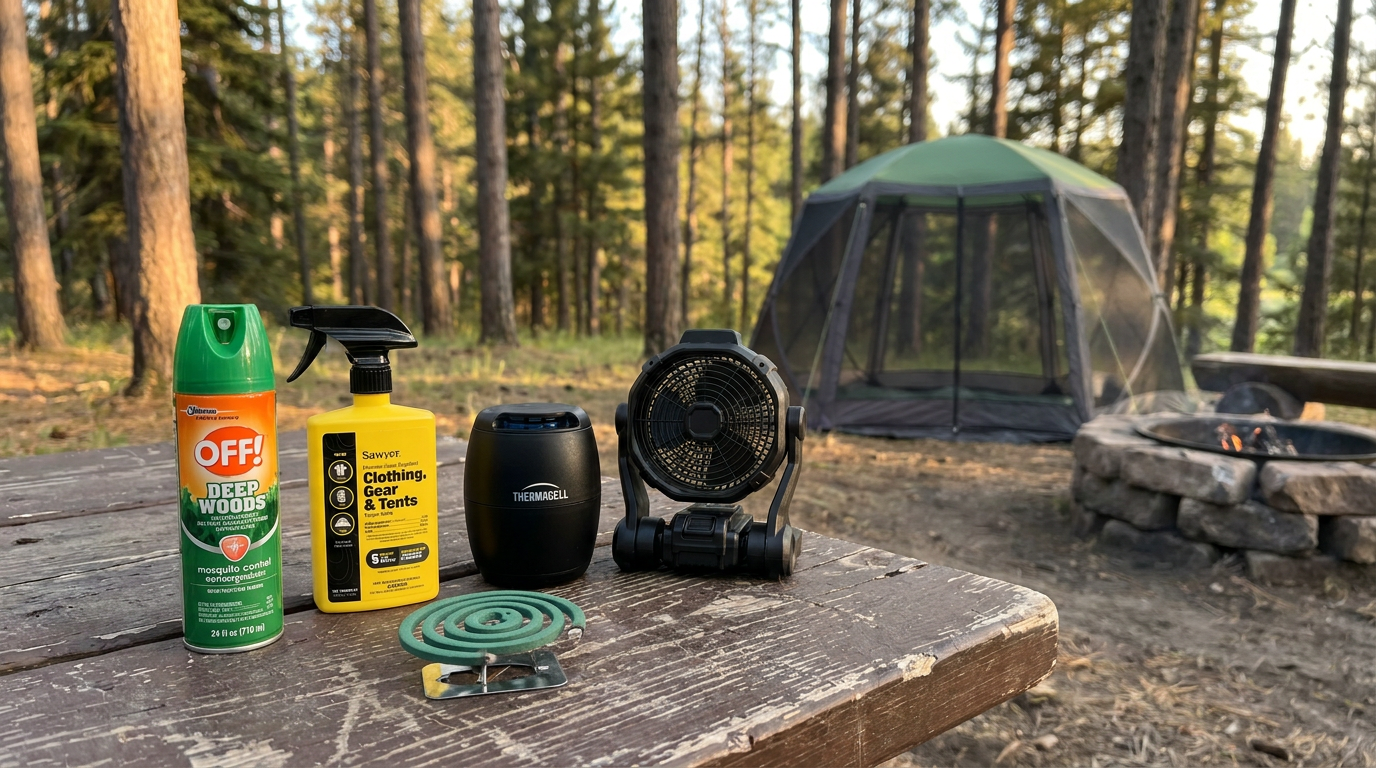
And then there's the ankle problem — which almost nobody talks about, and which explains why most mosquito solutions fail. Mosquitoes don't fly at eye level. They fly low — at ankle and knee height — because that's where they detect foot bacteria, which is one of their primary navigation signals. Almost every portable mosquito solution on the market is designed to be used at table height or hung from a tree branch. Which means they're positioned 4 to 6 feet above where the mosquitoes are actually flying.
I didn't fully understand this until season three of my testing. It explained a lot.
How I Tested These Solutions
Real Campsites. Real Conditions.
Every solution was tested at actual campgrounds across the southeastern and midwestern United States — not in a controlled environment, not in a backyard. If it couldn't handle wind, humidity, rain, and variable terrain, I counted that as a failure.
Can I Actually Sit Outside Without Getting Bitten?
The only metric that matters for a camper. Not a 10-foot bubble. Not a 3-foot radius around a device. Can I sit at a picnic table, walk to the fire, and exist in my campsite without getting eaten alive?
Does It Work Without Me Babysitting It?
Camping is supposed to be relaxing. Any solution that requires me to constantly refill, reposition, recharge, or monitor is not a real solution. Set it up. Walk away. It either works or it doesn't.
What Does It Actually Cost Over Time?
A cheap initial price is meaningless if you're buying refills every trip. I calculated the real three-season cost of every solution, including all consumables.
Here's every solution I tested, ranked from best to worst. The ranking might surprise you.
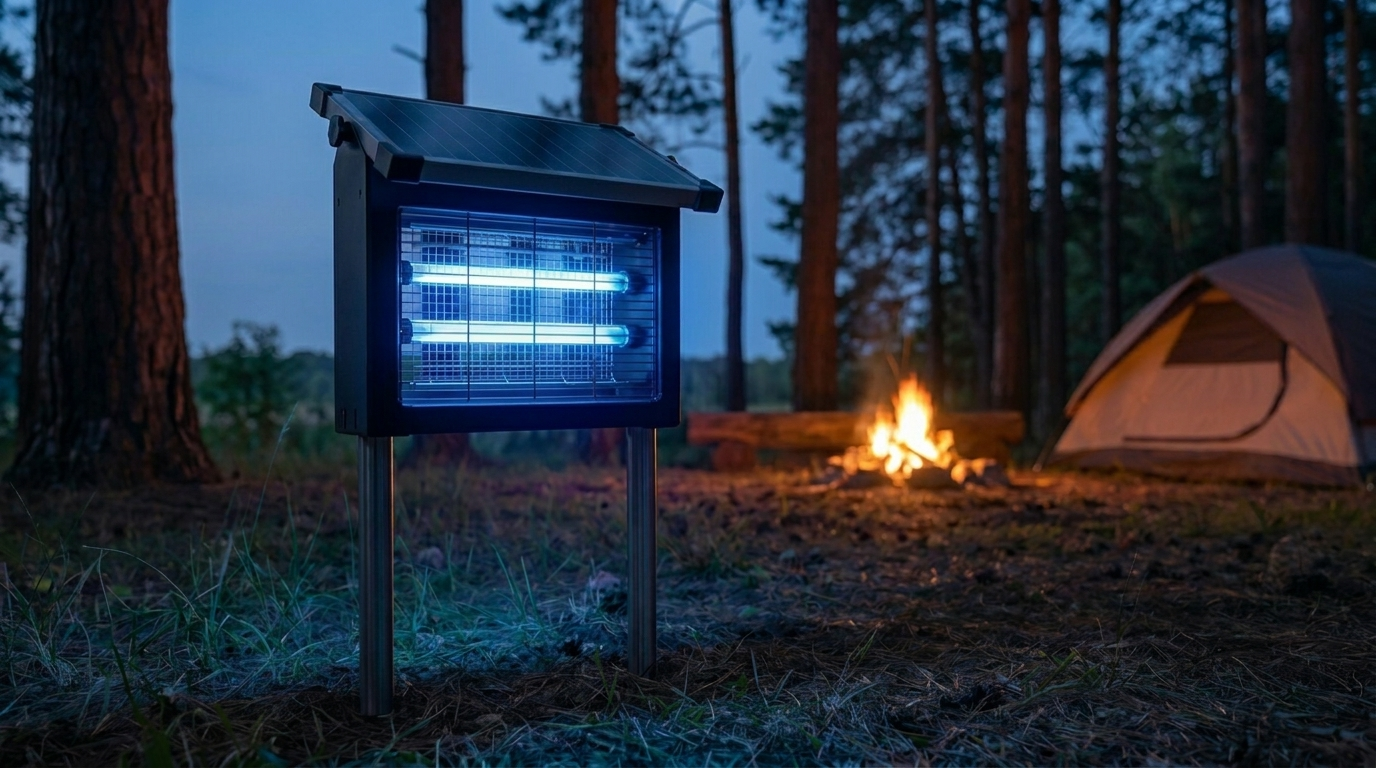
GroundGuard Sentinel — Solar Bug Zapper
Quick Specs
How I Found It
Honestly? Another camper at a site in Tennessee. I'd set up my Thermacell, a breeze came through, and the mosquitoes came straight back. I was swearing about it quietly when the guy at the next site said "I had the same problem. Try staking one of these in the corner of your site." He pointed to a black unit in the grass near his picnic table, glowing faintly blue. I'd never seen anything like it.
My Experience
The setup took maybe ninety seconds. Push the stakes into the ground, make sure the solar panel is angled toward where the sun will be during the day, flip the switch to auto. That's it. It charged during the afternoon and turned itself on when the light dropped.
The first thing I noticed was the sound. Every few seconds, a sharp crack. Not loud, but audible — the sound of the electric grid doing its job. I've since learned that sound does something to your brain. There's something deeply satisfying about it. Every pop is a mosquito that isn't biting you.
By 9pm on that first night I realized I hadn't swatted once. I was sitting in a camp chair six feet from the unit with a beer and no bug spray and I wasn't being bitten. After two years of various solutions, that felt almost impossible.
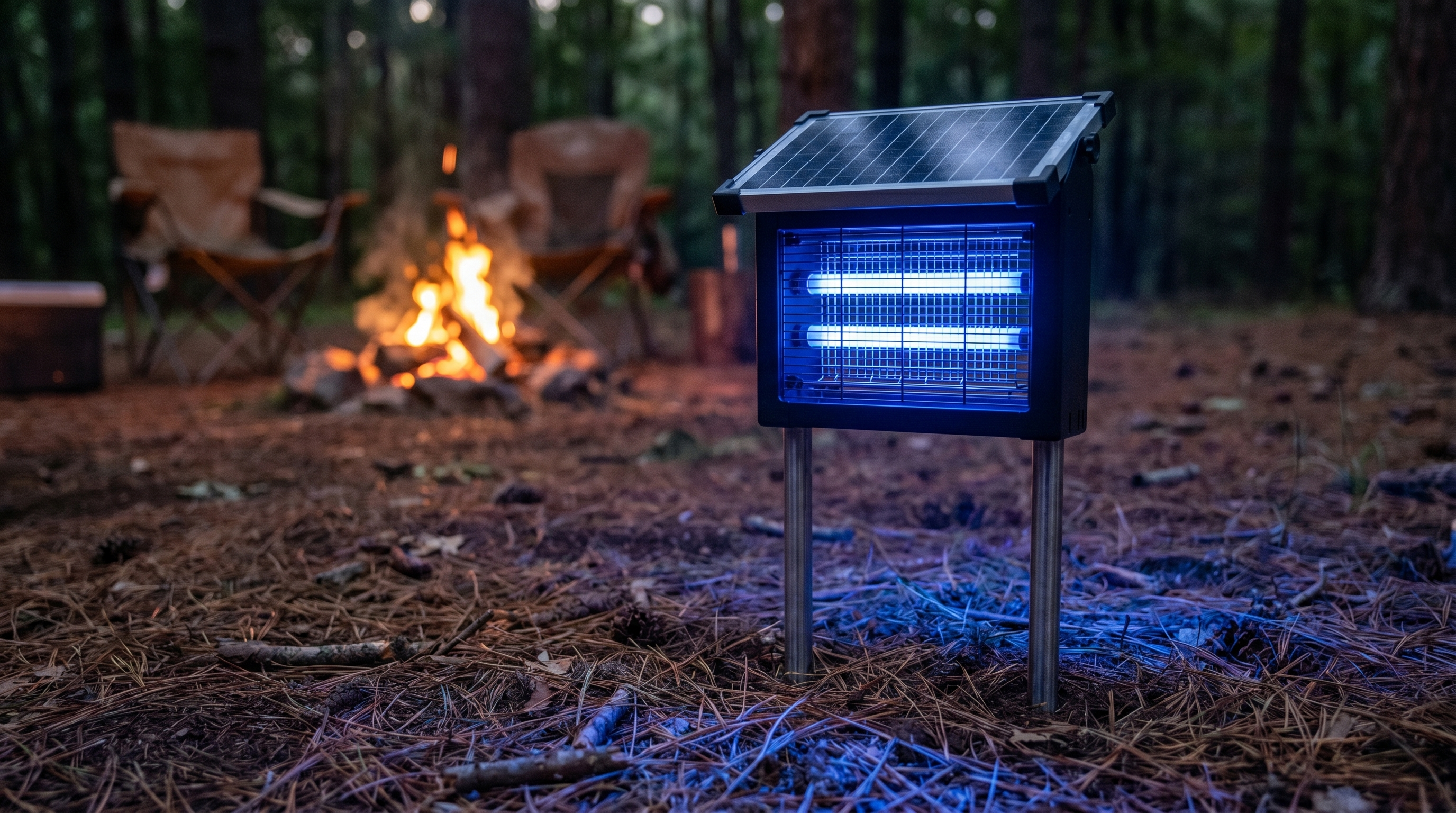
The solar panel charges it reliably during the day — even on overcast days it held enough charge to run through the night. This matters enormously for camping, where you almost never have access to power outlets. The Thermacell needs butane. The fan needs power. The GroundGuard needs sunlight, which every campsite has.
By the third camping trip I was regularly checking what it had caught overnight. The answer was always: a lot. The catch tray accumulates fast. I hose it off, let it dry, and it's ready again.
What Works
- Solar powered — zero dependency on power outlets
- Stakes at ankle height where mosquitoes actually fly
- Fully automatic — on at dusk, off at dawn
- Wind has zero effect on performance
- No chemicals anywhere near your food or skin
- No ongoing cost — ever
- Fully waterproof — leave it out in rain
- Covers 2,100 sq ft — your whole campsite
What Doesn't
- Coverage is generous but not infinite — if you've got a full acre, you want two
- The UV glow is noticeable at night — which is honestly how you know it's working
- Not silent. You hear the occasional pop — after two years of being bitten, I find it genuinely satisfying
Thermacell E55
Quick Specs
My Experience
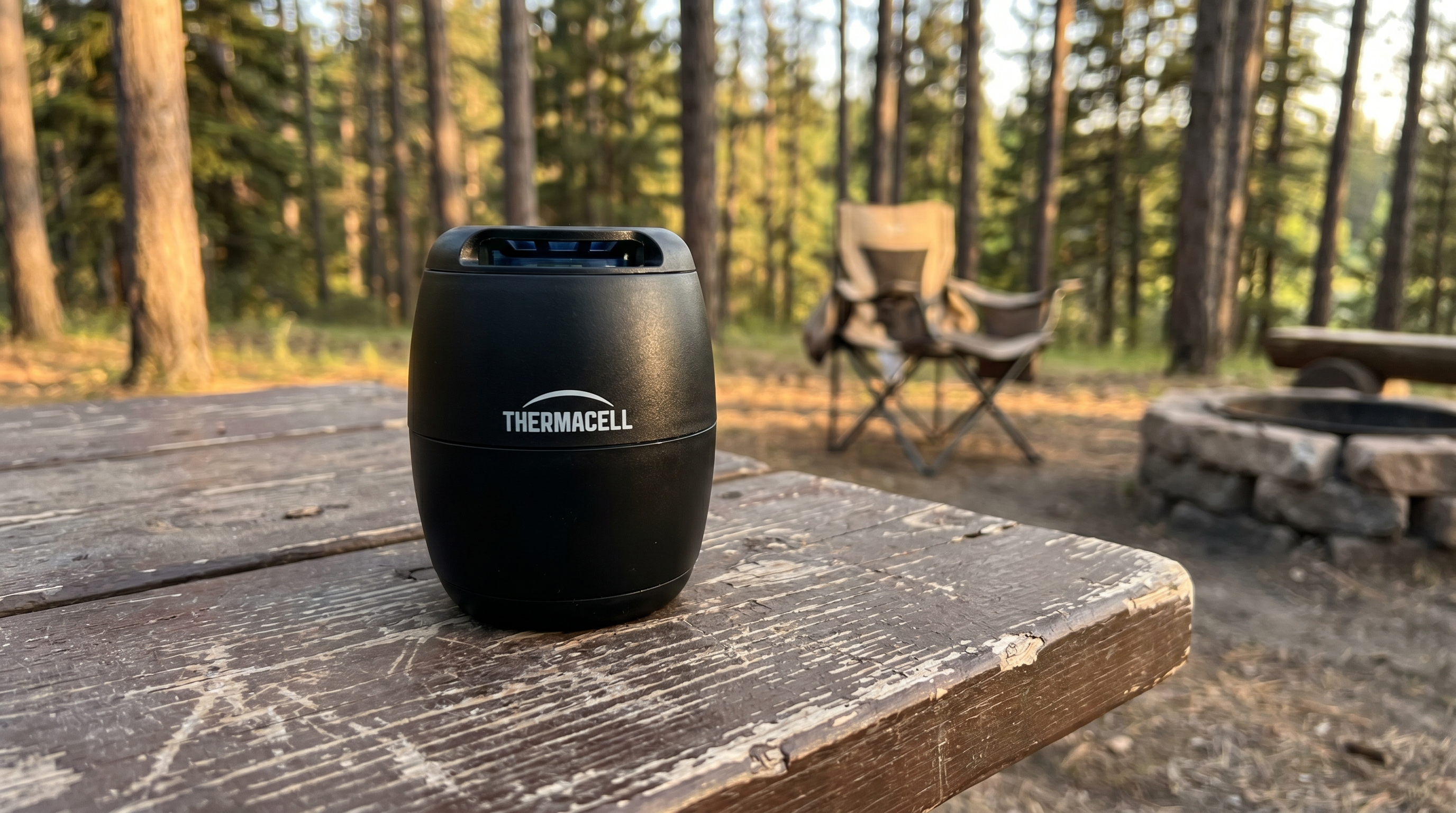
The Thermacell was my go-to for two full seasons. And to be fair, when it works, it works. Sitting directly around a table in calm air, you genuinely notice a difference. I almost cried the first time I used it on a still evening. For the first thirty minutes I thought I'd finally solved the problem.
Then a breeze came through. And that was that.
The Thermacell works by heating a chemical mat and releasing it into the air around you. I'll be honest — the idea of sitting in a cloud of chemicals all evening never really sat right with me. I'm not a scientist and I won't pretend to be, but breathing that stuff in for hours just doesn't feel like something I want to be doing on a camping trip. And the wind problem makes it worse — any breeze takes the whole thing with it, so you're getting the exposure with none of the benefit.
I still bring my Thermacell for kayaking or fishing from shore — small, calm situations where it shines. For a campsite, it's not a complete solution.
What Works
- Genuinely effective in calm, still conditions
- Compact and lightweight for backpacking
- No smell, no spray
What Doesn't
- Fails completely in any wind
- Covers 15 sq ft — a campsite is hundreds of sq ft
- Ongoing refill cost adds up fast
- Mosquitoes return the moment it turns off
- Requires butane — one more thing to pack and run out of
DEET Spray (OFF!, Repel, Sawyer)
Quick Specs
My Experience
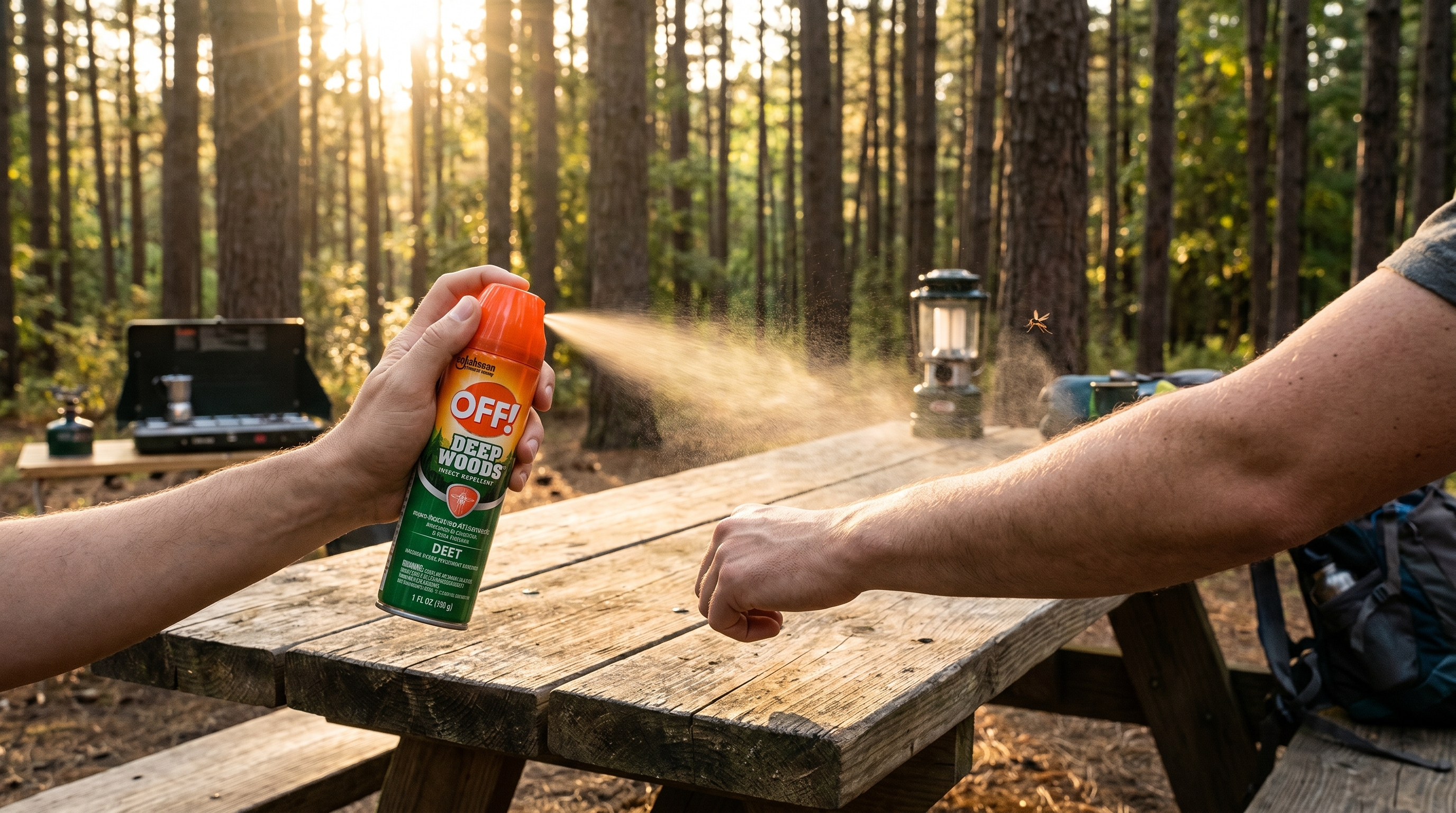
I used DEET for years before I started testing alternatives. It works — sort of. The problem is that it works differently for different people. DEET masks the CO2 and lactic acid signals mosquitoes use to track you, but mosquito attractiveness is 85% genetic. If you're naturally high-attractiveness — and some people just are — DEET gives you a partial buffer at best.
I've had trips where I covered myself in DEET and still got 20 bites over an evening. I've also watched people next to me who used the same spray get zero. The difference isn't the product. It's the person.
The bigger issue: DEET doesn't kill anything. You're fighting defensively every single trip, reapplying every few hours, and the mosquito population around your site is completely unaffected. You're just trying to make yourself a less appealing target. They're still there. They're still biting other people. The problem is never actually solved.
What Works
- Cheap and widely available
- Reasonably effective for low-attractiveness individuals
- Lightweight and easy to pack
What Doesn't
- Highly variable effectiveness person-to-person
- Doesn't kill — population keeps growing
- Must reapply constantly
- Damages synthetic fabrics and equipment
- Oily, unpleasant feel on skin
- Neurotoxicity concerns with high or repeated exposure
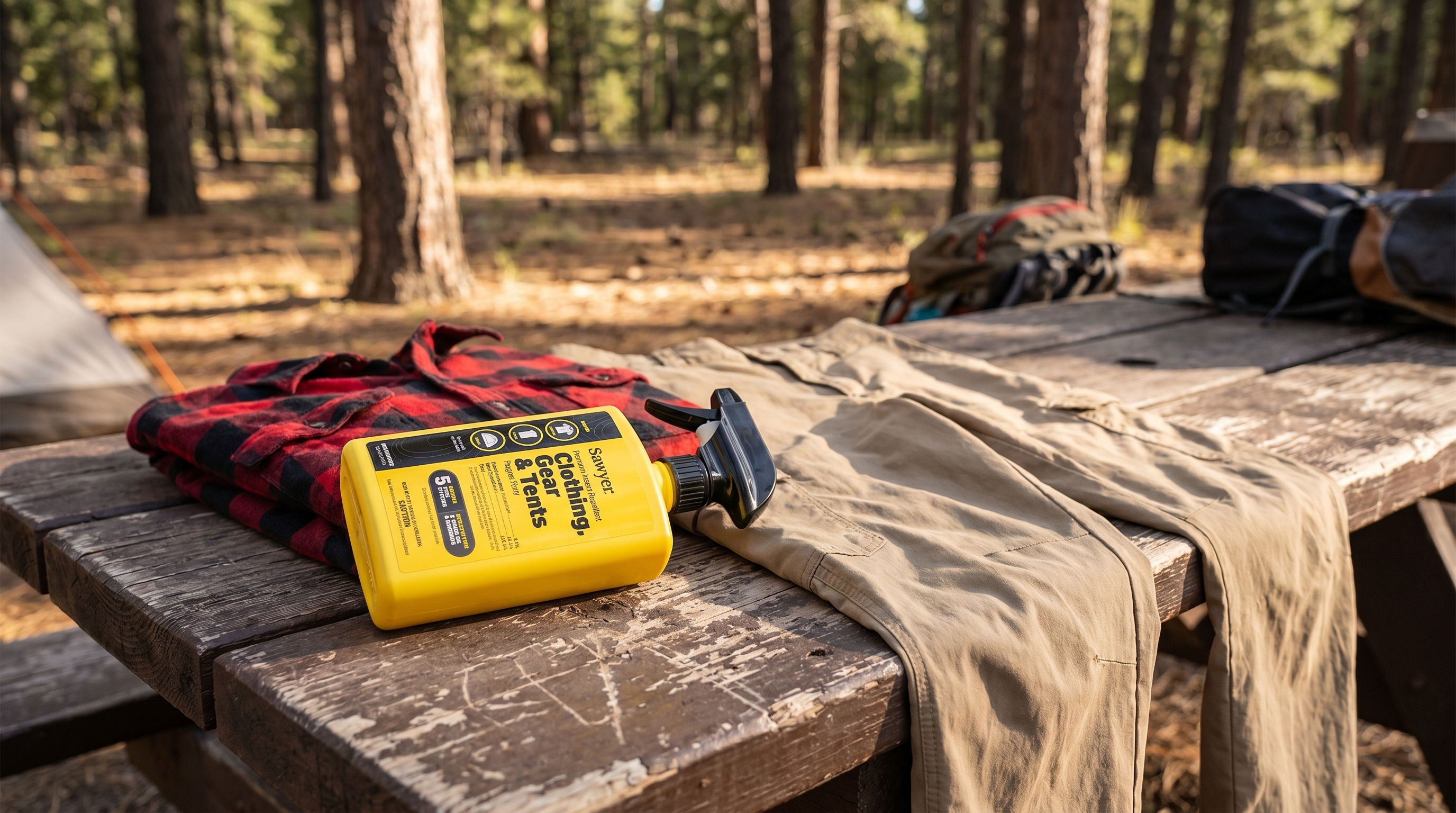
Permethrin Clothing Treatment
Quick Specs
My Experience
I treated my camping clothes with permethrin for two seasons. It does kill mosquitoes on contact with treated fabric — which sounds better than it is, because mosquitoes that land on your neck, face, or hands are completely unaffected.
The thing that made me stop wasn't the limited effectiveness. It was my cat.
Beyond the cat situation, I just started thinking about it differently. This is a chemical strong enough to kill insects on contact — and I'd been spraying it on the clothes I wear against my skin all day. I don't need a science degree to feel like that's probably not a great idea. If there's an option that doesn't involve soaking my gear in something that toxic, I'm taking it.
What Works
- Does kill mosquitoes that contact treated fabric
- Odourless once dry
- Lasts through several washes
What Doesn't
- Potentially fatal to cats — any contact
- Toxic to fish, bees, and aquatic life
- Only protects fabric — not exposed skin
- Classified as a possible human carcinogen
- Not a campsite solution — personal coverage only
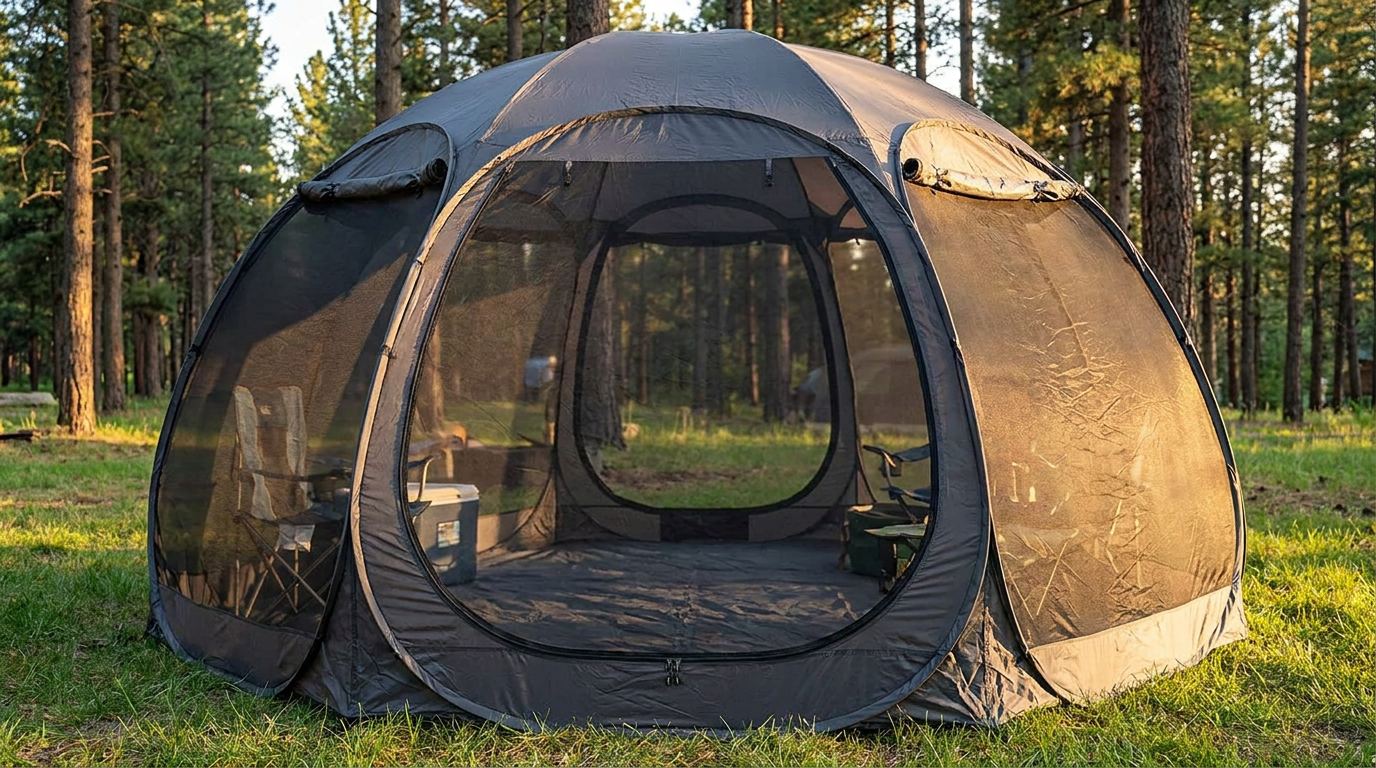
Camping Screen Tent / Screened Shelter
Quick Specs
My Experience
I'll say this: a screen tent completely stops mosquitoes. If you are inside it and it is properly sealed, nothing bites you. On that single metric, it's perfect.
The problem is everything else.
I bought a large screened shelter in season two, desperate enough to try anything. I set it up over my picnic table and chairs. Mosquito-free for the whole evening. Technically a victory. But I sat inside a mesh cage and watched the rest of the campsite through screen mesh, unable to walk to the fire pit without unzipping, stepping outside, and immediately being swarmed. Every time I got up to cook, to get a drink, to use the bathroom, to do anything — I was exposed again.
Camping is supposed to be freedom. Moving freely through a space under the sky. A screen tent turns that into managed confinement. I packed it away after that trip and haven't brought it since. There's something fundamentally wrong with a mosquito solution that restricts your movement more than the mosquitoes themselves do.
What Works
- 100% effective when you're inside it
- No chemicals
- Durable and long-lasting
What Doesn't
- You're trapped inside it to stay protected
- Defeats the purpose of camping
- Bulky and heavy to transport
- 15–30 min setup every trip
- No protection the moment you step outside
- Doesn't reduce the mosquito population at all
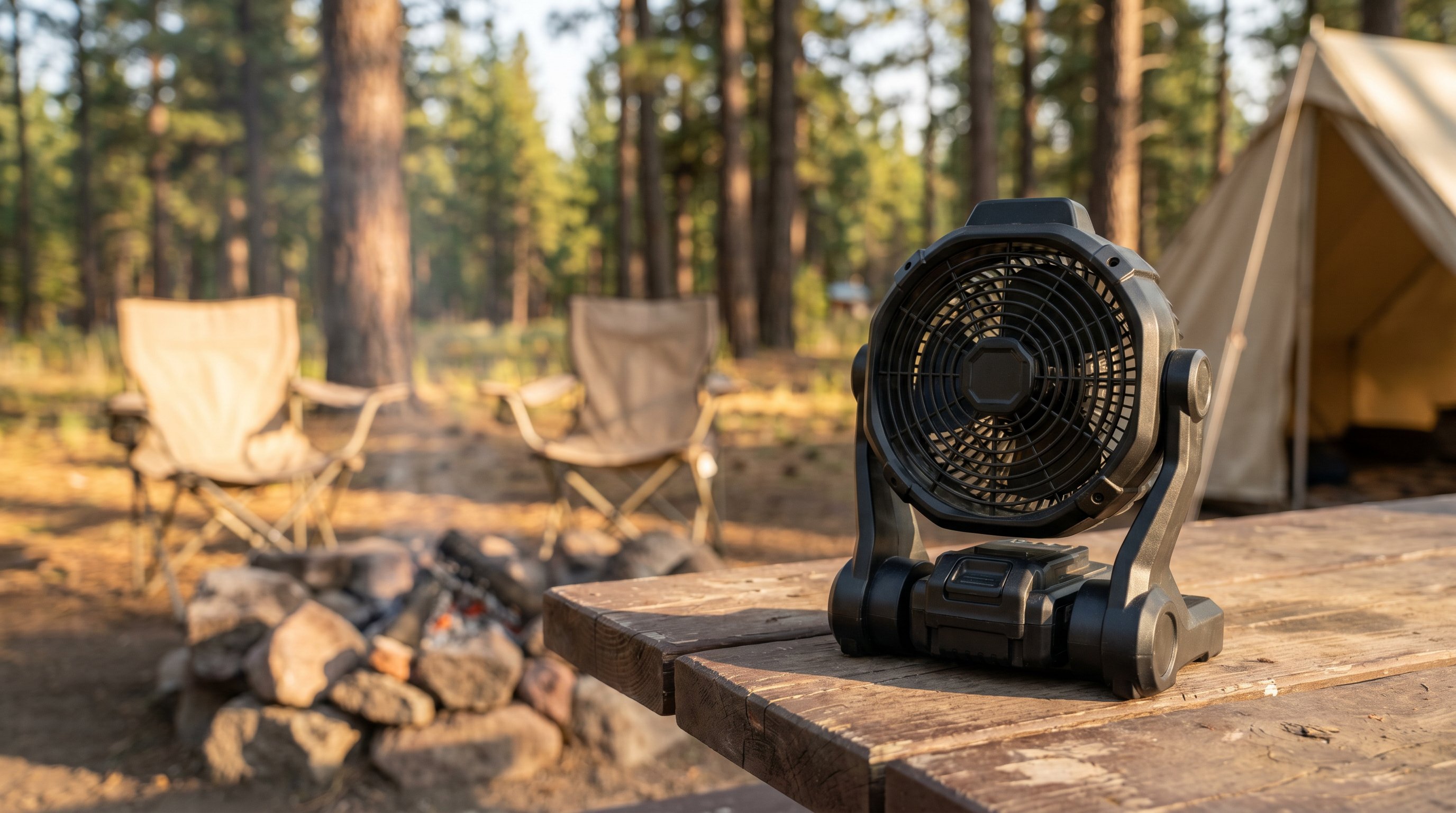
Portable Fan (Battery / Electric)
Quick Specs
My Experience
A fan is genuinely one of the better tips you'll find in camping forums, and I understand why people recommend it — mosquitoes are weak fliers. They struggle to navigate properly in consistent wind. If you sit close enough to a fan that you can feel the air on your face, you'll notice a real difference in how many land on you.
But the coverage area is approximately the size of a person sitting directly in front of it. Which means one fan protects one person, in one position, as long as they don't move.
And the power problem is significant for real camping. Most campgrounds don't have power hookups at the site. If you're car camping, you could run it off a power bank — but a good fan draws enough current that you'll burn through batteries in a few hours. There's no solar option. You're dependent on power infrastructure that camping often doesn't have.
I tried setting up two fans to create a wider coverage zone. It helped marginally. It also required two power sources and meant two things to pack, set up, and monitor. For the protection it offered, the logistics weren't worth it.
What Works
- Genuine relief for the person directly in the airflow
- No chemicals at all
- Doubles as cooling on hot nights
What Doesn't
- Coverage is a narrow lane — one person, one position
- Zero protection the second you stand or move
- No solar panel — useless without power or batteries
- Doesn't kill mosquitoes — population stays and comes back
- Impractical for a full campsite setup
- Noisy — detracts from the campfire atmosphere
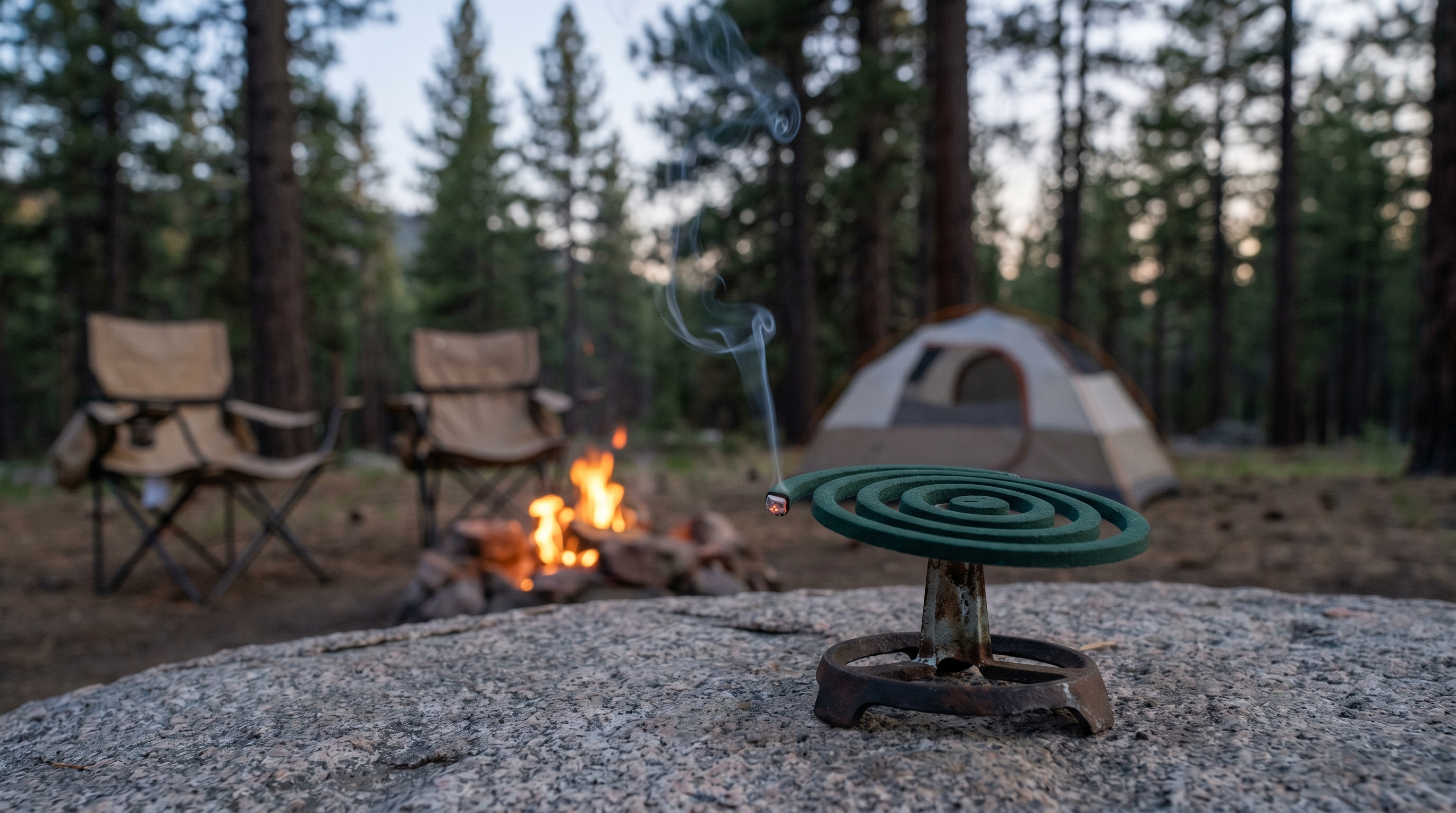
Citronella Coils
Quick Specs
My Experience
I've used citronella coils at nearly every campsite for the better part of a decade because they were cheap and because everyone said they worked. I got bitten standing directly next to a lit coil more times than I can count.
The science on citronella is genuinely thin. Studies show it has some repellent properties in laboratory conditions — still air, controlled temperatures, controlled distances. At an actual campsite, where there's always some movement in the air, the smoke goes wherever the breeze takes it, which is almost never directly toward you consistently.
I still bring them occasionally because they're cheap and light. But honestly — sitting next to burning coils all evening, breathing that smoke in, doesn't feel much better than just getting bitten. At least the bites go away. If there's something that needs no chemicals at all, that's what I'd rather have going.
What Works
- Extremely cheap
- Lightweight and easy to pack
- Smell isn't unpleasant
What Doesn't
- Fails completely in any wind
- No meaningful campsite coverage
- Doesn't kill mosquitoes
- Smoke goes the wrong direction most of the time
- Thin scientific evidence for effectiveness outdoors
Side-By-Side Comparison
| Criterion | GroundGuard #1 | Thermacell #2 | DEET #3 | Permethrin #4 | Screen Tent #5 | Fan #6 | Citronella #7 |
|---|---|---|---|---|---|---|---|
| Grade | A+ | B | C+ | C | D | D− | F |
| Needs power/outlet | ✓ No | ✕ Butane | ✓ No | ✓ No | ✓ No | ✕ Yes — no solar | ✓ No |
| Works in wind | ✓ Yes | ✕ Fails | ~ Partial | ~ Partial | ✓ Yes | ✓ Yes | ✕ Fails |
| Campsite coverage | ✓ 2,100 sq ft | ✕ 15 sq ft | ✕ Body only | ✕ Fabric only | ~ Inside only | ✕ Narrow lane | ✕ 2 feet |
| Kills mosquitoes | ✓ Yes | ✕ Repels only | ✕ Repels only | ~ On fabric | ✕ No | ✕ No | ✕ No |
| No chemicals | ✓ Yes | ~ Allethrin | ✕ DEET | ✕ Permethrin | ✓ Yes | ✓ Yes | ~ Citronella |
| Safe for cats/pets | ✓ Yes | ~ Limited | ~ Limited | ✕ Toxic | ✓ Yes | ✓ Yes | ~ Limited |
| 3-season total cost | ✓ $189.95 | ✕ $225–285 | ✓ $40–80 | ~ $60–100 | ~ $80–300 | ~ $30–120 + batteries | ✓ $20–40 |
| Ankle-height placement | ✓ Yes | ✕ Table height | ✓ On person | ✓ On person | ✕ N/A | ✕ Table height | ✕ Table height |
| Fully automatic | ✓ Yes | ✕ Manual | ✕ Manual | ✓ Once applied | ✕ Manual | ✕ Manual | ✕ Manual |
| Still using it? | ✓ Every trip | ~ Sometimes | ~ Backup only | ✕ Never | ✕ Never | ✕ Never | ~ Occasionally |
Four Seasons Later
Last August I was at a campsite in the Smoky Mountains. It was the kind of evening that would have been a misery three years ago — near a creek, humid, warm, the kind of night where the mosquitoes come out in waves. I staked the GroundGuard into the corner of the site while I set up the tent, angled the solar panel toward the afternoon sun, and forgot about it.
By the time dinner was ready the unit had been running for an hour and I hadn't thought about mosquitoes once. We ate outside. We sat by the fire until midnight. I woke up the next morning, checked the catch tray, and dumped it out. The creek was still there. The mosquitoes were significantly less there.
Four summers. Seven solutions. Two seasons of Thermacell refills that cost me more than the unit itself. A full set of permethrin-treated camping clothes I had to throw out after what happened to my cat. A screen tent I bought, assembled twice, and donated because it turned every camping trip into a fishbowl experience. Bottles of DEET that melted my watch strap and sat greasy on my skin all evening. A fan that worked for exactly as long as I didn't move. Citronella coils that smelled okay and did nothing else.
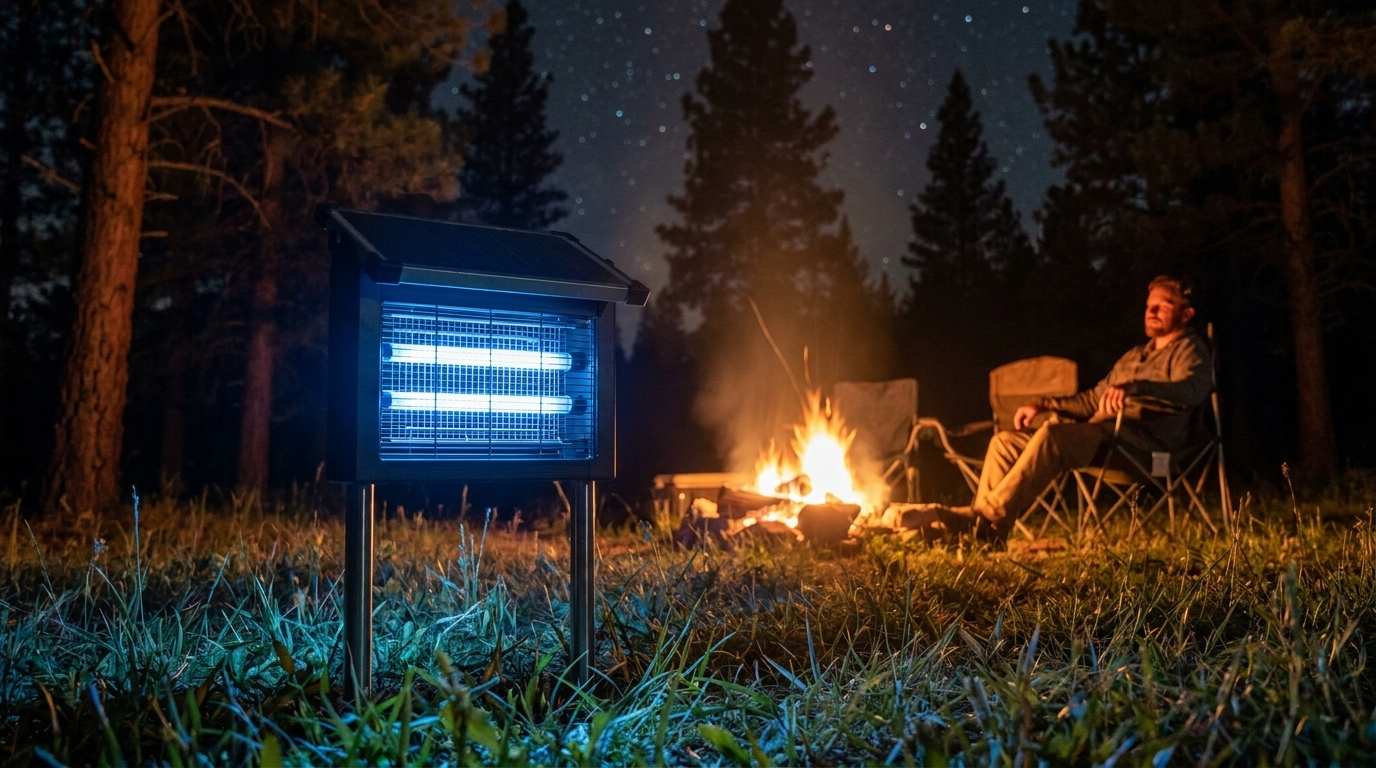
I'm writing this from the picnic table. No netting. No spray. No fan pointed at my ankles. The fire's been going for two hours and I haven't thought about mosquitoes once. The GroundGuard is staked in the grass about fifteen feet away — that faint blue glow at the edge of the campsite. I set it up when we arrived and haven't touched it since.
That's actually what solving the problem feels like. It stops being a thing you think about.
I used to pack a dedicated mosquito kit for every trip. DEET, backup DEET, Thermacell and two spare butane cartridges, coils for the table. I'd spend the first thirty minutes of every evening setting up a chemical perimeter that a single breeze could dismantle. Now I pack one unit, stake it in on arrival, and go do something else.
Still Reading? Stake One At Your Campsite And Check Your Bite Count In The Morning.
$189.95, one-time. Solar powered. Auto dusk-to-dawn. Stakes at ankle height where mosquitoes actually fly. 2,100 sq ft of coverage. Zero cords, zero cartridges, zero ongoing costs. Year three, it's still $189.95.
SEE THE GROUNDGUARD SENTINEL →